






The Rare Condos With Almost Zero Sales for 10 Years In Singapore: What Does It Mean for Buyers?
A seasoned content strategist with over 17 years in the real estate and financial journalism sectors, Ryan has built a reputation for transforming complex industry jargon into accessible knowledge. With a track record of writing and editing for leading financial platforms and publications, Ryan's expertise has been recognised across various media outlets. His role as a former content editor for 99.co and a co-host for CNA 938's Open House programme underscores his commitment to providing valuable insights into the property market.


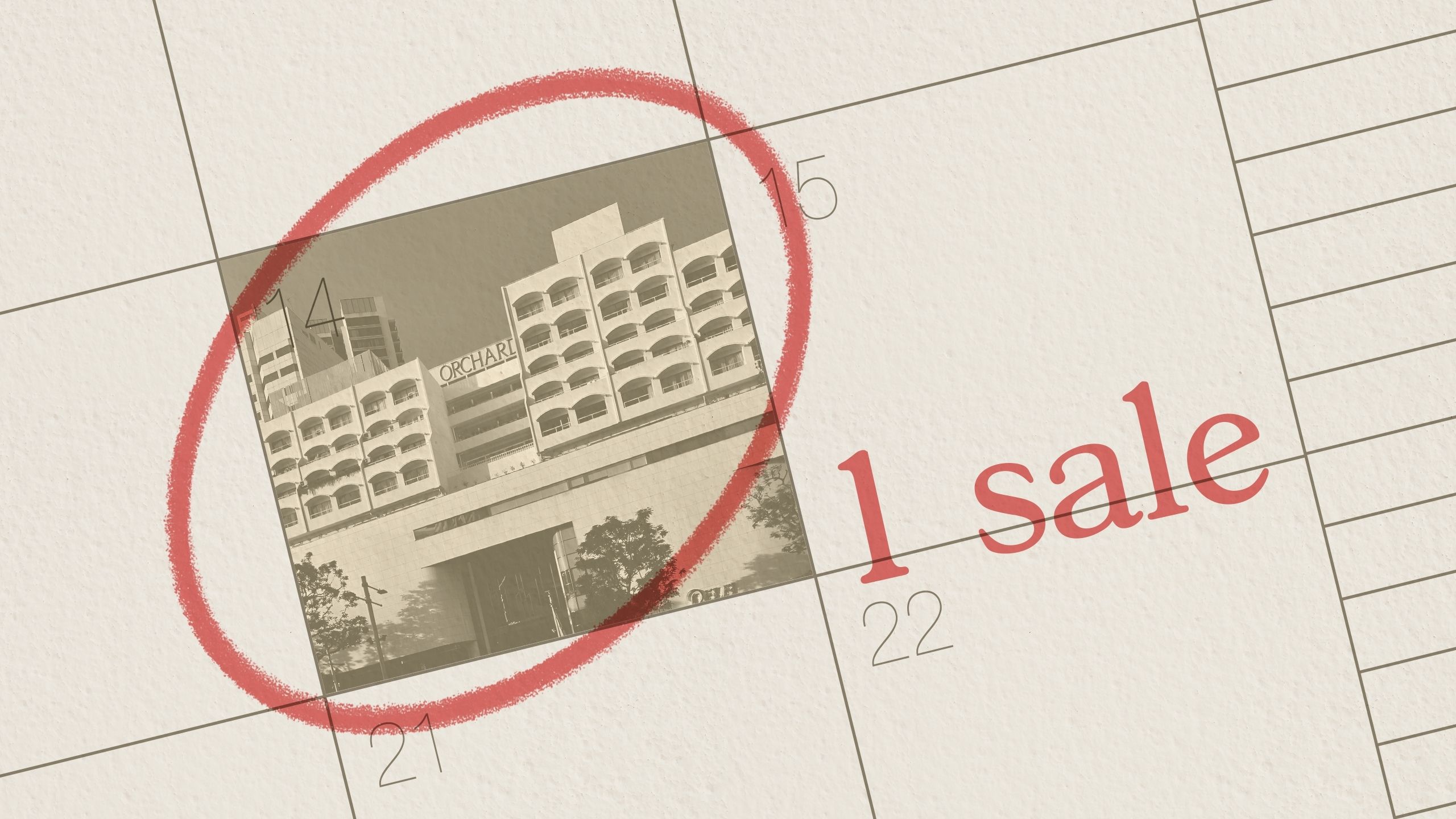
Most condos in Singapore change hands frequently, with some units transacting every few years as owners upgrade, cash out, or move closer to work and schools. So it’s always striking when a development barely sees any movement at all. In a market known for being fast-moving, a handful of condos have recorded just one sale in an entire decade. These slow-moving outliers often reveal something deeper about the project, its residents, or its positioning, so we decided to take a closer look.
Condos with only one transaction in 10 years

Notable trends from the above
There isn’t a way to precisely tell you why that one transaction occurred over 10 years, but what we can do is identify certain patterns. From the above, the majority of the condos show the following qualities:
- Overwhelmingly freehold/999-year projects
- Very large units with very low unit counts
- Many are in prime CCR territory
- Geylang and Telok Kurau walk-ups frequently appear
1. Overwhelmingly freehold / 999-year projects
The simple explanation for this is that some freehold owners don’t sell early, because the freehold premium only pays off later; so turnover is naturally low.
In the first couple of decades, a 99-year leasehold condo experiences very little lease decay and continues to appreciate. In fact, its price performance can look better than a freehold counterpart, simply because it was bought at a lower entry price (i.e., higher percentage gains due to the lower base price)
It’s only much later, at roughly around the 30- to 40-year mark, that freehold or 999-year projects show a clear advantage. This is when leasehold developments start declining from lease decay, and experience more issues like limited financing*. This is where the freehold premium shows its advantage and becomes worth paying.
Because of that, buyers who pay a premium for freehold/999-year leases generally hold for longer before selling. If they were to sell over a shorter period, like reselling a new launch after just 10 years, then they would have been better off buying a cheaper leasehold property to reap stronger gains.
Setting aside financial reasons, many buyers of large freehold homes also have their hearts set on an intergenerational asset. Some intend for many generations of their family to live under the roof they’ve provided; and for some of the older properties, the home may already be a legacy (e.g., left to multiple siblings by parents).
If the project was mainly bought for reasons like these – and it was a common motive in previous generations – then the transaction volume is understandably low.
*Maximum loan amounts can be reduced once a property has 60 or fewer years on the lease, depending on the bank in question. Financing is usually denied for properties with 30 years or less on the lease.
2. Very large units with very low unit counts
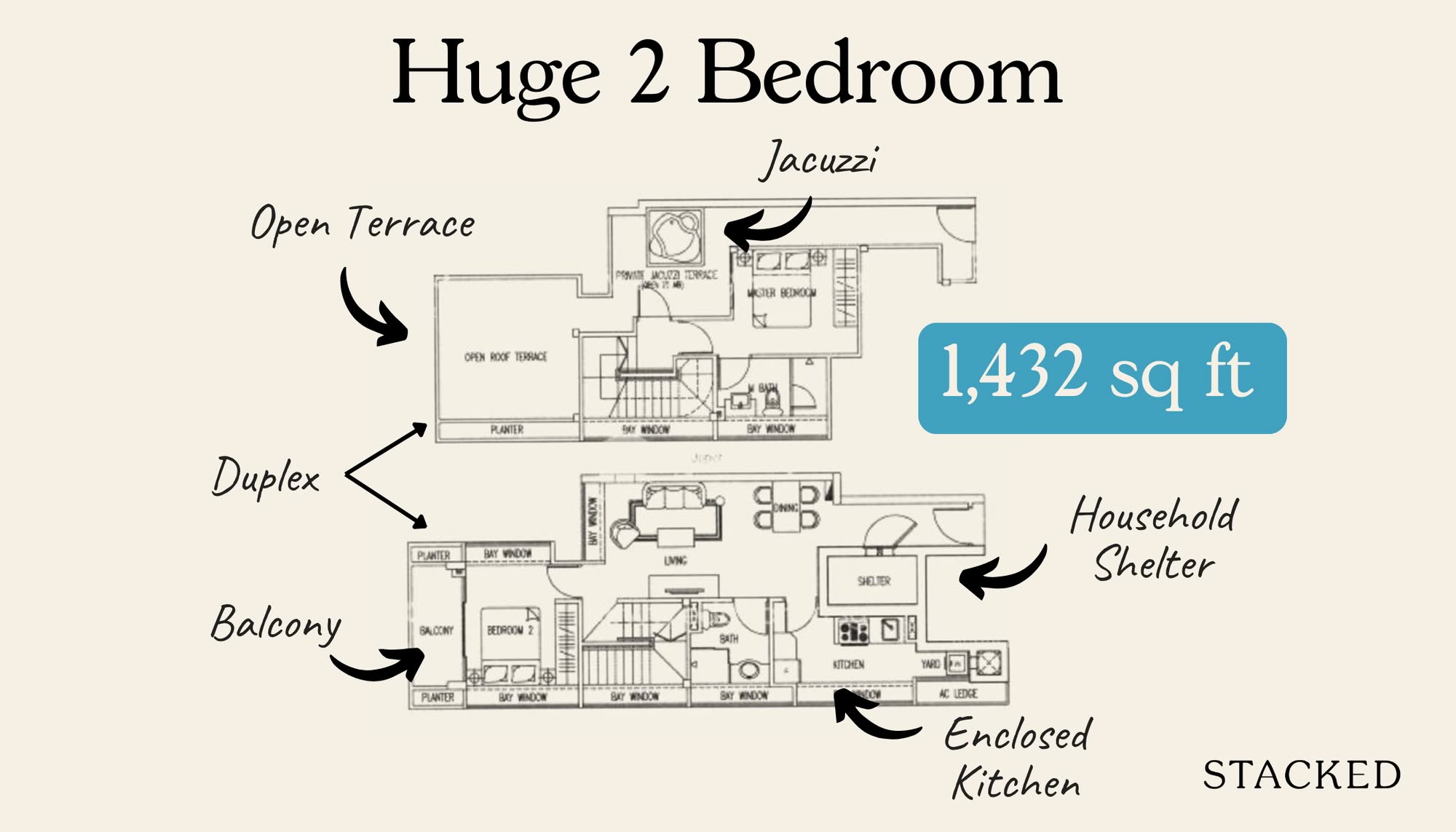
This isn’t true for all of the units above, but it’s true for many of them. Some of the units in the dataset are gigantic, and coupled with being freehold, this results in a jaw-dropping quantum that most buyers can never afford. For example, the 3,164+ sq ft Heritage Apartments that sold for $8.8 million. Or Lien Towers with a roughly 5,061(!) sq ft unit that sold for $8.4 million.
Besides few people qualifying or even wanting to buy these properties (someone who can afford $4 million + can easily buy a landed home), there’s also the scarcity of such large units to consider. Many owners of these large, prime region properties are generally not strapped for cash; and they’re aware that, if they were to sell their homes, chances are they’ll never have an equally spacious unit again.
Due to the large units, it’s also not uncommon to see low unit counts. Boutique and small condos are more common on the list than mass-market ones. This coincides with several factors: pricier properties are more likely to be located in lower-density areas, for example, and they’re also situated in more private locations. Presumably, the buyers of these properties can afford to drive, so the lack of public transport access is not an issue.
These factors happen to be the direct opposite of what mass-market condo buyers like: regular buyers prefer being near malls and MRT stations, and many would prefer larger condos with more land space for facilities like pools, gyms, etc. So even if they could afford some of these properties, the interest will be very niche.
3. Many are in prime CCR territory
A large portion of the list sits squarely in the CCR: River Valley, Orchard, Bukit Timah, Newton, Novena, Tanglin, etc.
These are districts where owners tend to be more financially secure. In the CCR, homes are often treated as long-term wealth storage rather than quick-turn assets. As mentioned above, many are part of a family portfolio or simply passed down.
These owners are, simply put, not interested in hearing how much they could get for their unit if they were to sell today. As one owner of a Tanglin-area condo once laughed and told me: “Sell and upgrade to where?”
To many, that home is already the endpoint of any “property progression.” This naturally suppresses resale volume.
The other more simple reason is, once again, quantum (total price). We have a more in-depth discussion of that issue here, where we point out that developers have had to build small in the CCR to keep units affordable. That in itself proves that the old, oversized resale units are too far out of budget.
4. Geylang and Telok Kurau walk-ups frequently appear
There isn’t much to say here, but we’re pointing it out because of how often they appear on the list.
The walk-ups in Geylang and Telok Kurau see low transaction volumes because they’re very niche properties. In Geylang, most of them are bought for the purposes of renting out to foreign workers. These units can be above some rather noisy commercial elements, ranging from pawn shops to bike accessory shops to restaurants. Some are also close to vice areas, so the buyer pool is extremely niche. Even among the people who do buy here, the intent is almost always to pursue rental income, not to focus on resale gains.
In Telok Kurau, the walk-up profile is completely different but equally sticky. This is a low-density landed/semi-landed area. It’s a niche market for buyers who want more privacy, more space, and fewer neighbours (and don’t mind losing accessibility for it). Once someone buys into Telok Kurau, they’re usually there for the long haul. Some units are also small family holdings, related to the shop below them, further lowering the likelihood of resale.
When you put all the patterns together, the “mystery” of one-transaction-in-10-years becomes…well, much less mysterious.
These are mainly niche projects or very old homes that, at their current size and accrued value, are difficult to sell. The others simply have an owner profile who has little or no interest in ever moving. In segments like these, liquidity isn’t a priority, and probably never was or will be. These are properties bought to keep.
For more on the Singapore property market, follow us on Stacked.